Watching a Rugby Match Without Chasing the Ball
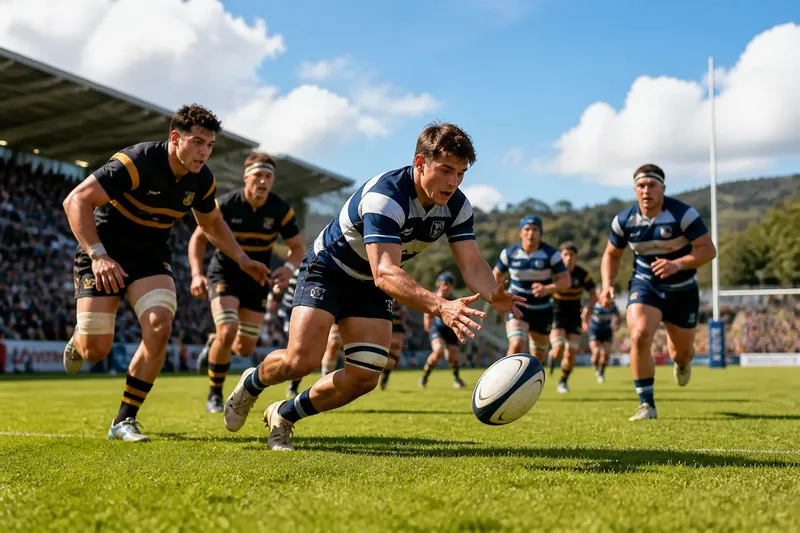
Watching a rugby match without chasing the ball helps you spot support runs and defensive shifts, so the next phase makes more sense without losing the action.
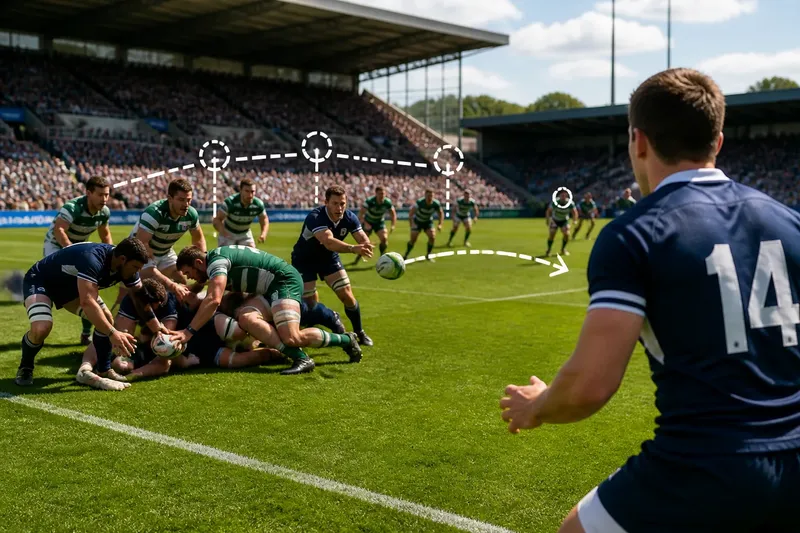
Watching a rugby match without chasing the ball helps explain why a team’s next move is available. Keep the ball as your reference point, then use brief glances at the players preparing to shape the next phase.
You can follow the ball, scan the wider formation, or alternate between the two. For a new viewer, alternating is usually the clearest approach: it keeps possession easy to follow while showing how players are arranging themselves before the next action.
Following the ball
Start with the carrier and the immediate contest. Notice whether the ball is passed, kicked or taken into contact, and how the next phase begins. This gives you a reliable account of events, especially when play is fast or unfamiliar.
Ball-first viewing is also useful after a turnover or a long kick. Find who has possession, where the nearest opponents are and what the referee signals if play stops. You can then work out where the restart will happen.
The limitation is the camera’s focus. A receiver may have begun a run before the pass arrives, while a kick may make more sense once you notice the players moving to chase it or cover the space behind. Following the ball alone can hide those preparations.
Reading the formation
Instead of tracking individual signals, look at how the team’s shape changes. In attack, notice who stays wide, who moves close to the carrier and whether players are spreading across the field or gathering around the next contest. In defence, watch whether the line advances together, drifts across or leaves players deeper behind it.
These positions suggest which options are available. If several defenders are close to the ball, an attack may have room farther out. If a defender is isolated near the touchline, a pass might test that channel. Neither observation predicts what will happen: teammates can adjust, and the ball-carrier may choose another route.
Keep the scan narrow. Look at the part of the formation relevant to the next phase, then return to the ball before a pass, kick or tackle changes the picture. Trying to watch the whole field at once is not worth the effort; a broad view can become a blur with unusually good intentions.
Alternating attention
During a pass, tackle or kick, watch the ball. When possession is secure and players are resetting, briefly look at the positions forming around the next contest. Return to the ball as the next movement begins.
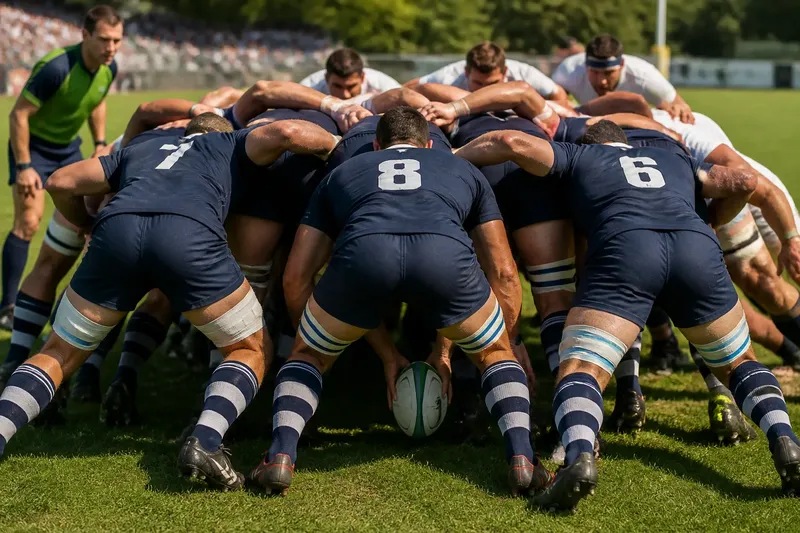
A ruck offers a useful pause. You can see which attackers are close enough to support the carrier, where teammates are holding width and how the defenders are arranging themselves. These are observable positions, not clues to a secret plan. Once the ball emerges, follow it again.
Say you are watching an invented match, with the ball just recycled from a ruck near the touchline. You follow the first pass, then scan the defensive line before the receiver takes the ball. Two defenders have shifted towards the touchline, while an attacker remains wide on the opposite side. The likely reading is that a cross-field pass may find space, but the receiver still has to make that choice and the defence may move across in time.
Support and space
A support runner stays available to the carrier. The player may run close behind for a short pass, move across the field or hold a wider position. Watch when the runner starts moving: an early run can show that the player is ready for a pass or to help secure the ball after contact.
Also watch how defenders respond. If one turns towards a runner, another part of the line may become less crowded. If the defenders hold their positions, the attack may need to keep possession and build another phase. Treat these movements as signs of the options on offer, not as promises about what follows.
One movement rarely tells the whole story. A gap may be covered by a defender outside the camera’s centre, and a player who appears free may not be the intended receiver. Keep your reading provisional until the ball confirms it.
Choosing a focus
Choose your focus according to what you want to follow:
- Follow the ball if you are learning the sequence of passes, tackles, kicks and restarts.
- Scan the formation if you want to see how the attacking shape or defensive line changes.
- Alternate attention if you want both a clear account of possession and a sense of the options forming around it.
You can change approach during a match. Return to the ball after a turnover or a kick; scan the nearby formation while players reset. If you lose track of possession, abandon the wider view and find the ball again.
It is not worth identifying every player or assigning a motive to every movement on a first viewing. Start with one visible detail, such as whether defenders are moving together or whether an attacker is staying wide. That is enough to make the next phase easier to read.
Where should you look between phases?
What should you watch after a tackle?
Find the ball and the ruck first, then look at the nearby attackers and defenders. Their positions show which options may be available when play resumes.
How can you spot a support runner?
Look for a teammate moving in relation to the carrier before the next pass or tackle. A close runner may offer a short option, while a wider player can keep defenders spread.
Should you watch the whole field?
Usually not. Keep the ball as a reference and scan the area relevant to the next phase, widening your view when play slows or the teams reset.
When should you return to the ball?
Look back as the carrier passes, kicks, enters contact or loses possession. Those moments can change the shape of play quickly.
A useful rhythm
Watching a rugby match without chasing the ball means shifting your attention briefly, not ignoring possession. Follow the immediate action, scan how players are arranging themselves during a pause, then return before the next contest. The distinction is useful: formations show possible options, while the ball tells you which one the team actually takes.
For your next viewing, track either the attacking shape or the defensive line for a short passage. Note where that group is positioned before possession changes, then see how it responds afterwards. Watching a rugby match without chasing the ball becomes easier once you treat each glance away as a question about space, rather than an attempt to predict the whole match.